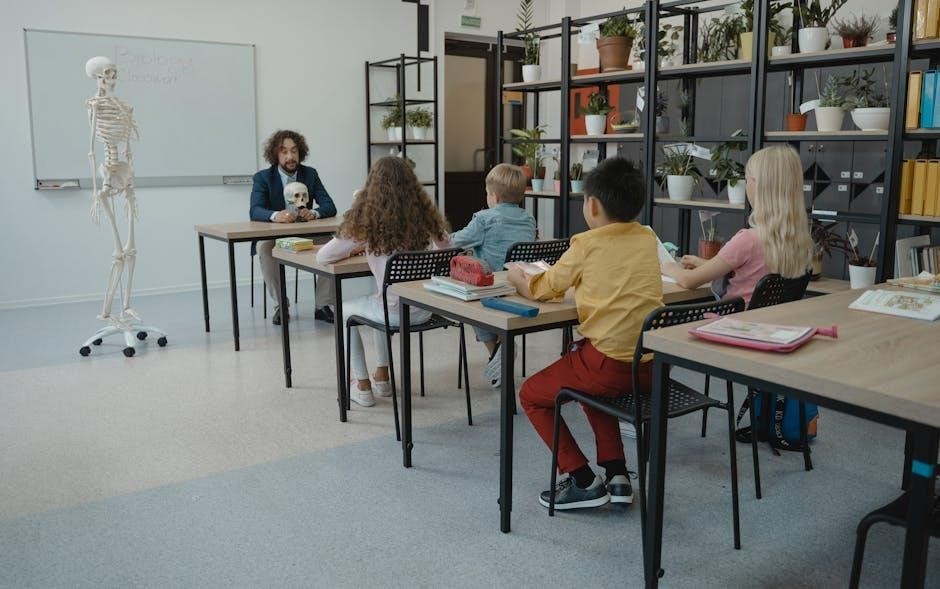
The New Art and Science of Teaching PDF: A Comprehensive Guide
Exploring the intricacies of education, this guide delves into innovative strategies, leveraging research to enhance learning outcomes and classroom effectiveness for all students.
Understanding the Core Principles
Central to effective pedagogy, as illuminated by contemporary research, lies a deep understanding of how students learn. This involves recognizing that learning isn’t merely about absorbing information, but actively constructing knowledge through cognitive processes. The “New Art and Science of Teaching” emphasizes identifying similarities and differences, a foundational skill for comprehension.
Furthermore, it highlights the crucial role of feedback – not just as corrective measures, but as informative guidance that propels learning forward. Cooperative learning, fostering collaboration and peer interaction, emerges as a powerful tool. These principles aren’t isolated; they intertwine, creating a synergistic effect when implemented thoughtfully.
Ultimately, grasping these core tenets empowers educators to move beyond traditional methods and embrace evidence-based practices, fostering a dynamic and engaging learning environment for every student.
Robert Marzano’s Research Foundation
Robert Marzano’s extensive meta-analysis of educational research forms the bedrock of “The New Art and Science of Teaching.” His work synthesizes findings from thousands of studies, identifying key instructional strategies demonstrably linked to increased student achievement. Marzano’s research isn’t prescriptive, but rather provides a framework for informed decision-making.
He emphasizes the importance of identifying reliable indicators of effective teaching, moving beyond anecdotal evidence towards empirically supported practices. This foundation centers around five dimensions of teaching – crucial elements that, when skillfully implemented, significantly impact learning.
Marzano’s approach is grounded in cognitive science, recognizing how the brain processes information and how learning occurs. His work provides educators with a robust, research-backed toolkit for enhancing their practice and maximizing student potential, offering a pathway to continuous improvement.
The Five Dimensions of Teaching
Marzano’s Five Dimensions of Teaching represent a cohesive framework for effective instruction. These aren’t isolated techniques, but interconnected elements working synergistically to optimize learning. Dimension one focuses on identifying similarities and differences, fostering critical thinking and analytical skills. Dimension two centers on feedback, providing students with clear, actionable guidance to improve performance.
Cooperative learning forms the core of dimension three, emphasizing collaborative activities and peer interaction. Dimension four highlights the importance of setting objectives and providing feedback, ensuring students understand expectations and track their progress. Finally, dimension five emphasizes generating and testing hypotheses, promoting inquiry-based learning and problem-solving.
Mastering these dimensions requires deliberate practice and ongoing reflection, transforming teaching from an art to a science – a blend of skill and informed strategy.
Dimension 1: Identifying Similarities and Differences
This foundational dimension, central to Marzano’s framework, emphasizes the cognitive process of comparing and contrasting. Students learn more deeply when they actively analyze relationships between concepts, ideas, or objects. Strategies include comparing, contrasting, classifying, and creating analogies – all designed to sharpen analytical thinking.
Effective implementation involves explicit instruction on how to identify key attributes and discern relevant distinctions. Graphic organizers, such as Venn diagrams and comparison charts, provide visual support for this process. Teachers should model this thinking aloud, demonstrating how they approach comparisons.
By consistently practicing these skills, students develop a stronger understanding of complex information and improve their ability to make informed judgments, fostering deeper comprehension.
Cognitive Processes and Learning
Understanding how students think is paramount. Marzano’s research highlights several key cognitive processes crucial for effective learning: retrieval practice, elaboration, and organization. Retrieval practice strengthens memory through repeated recall, while elaboration involves connecting new information to prior knowledge.
Organization focuses on structuring information in a meaningful way, utilizing techniques like summarizing and note-taking. These processes aren’t isolated; they interact dynamically. Teachers should design lessons that intentionally activate these cognitive functions.

Furthermore, recognizing that students process information differently is vital. Addressing varied learning styles and providing multiple representations of content enhances comprehension and retention, ultimately leading to more robust learning outcomes.

Dimension 2: Feedback
Effective feedback is more than just grades; it’s a crucial catalyst for student growth. Marzano’s research emphasizes that feedback should be specific, timely, and focused on the task, not the person. Vague praise like “good job” is less impactful than detailed comments pinpointing strengths and areas for improvement.
Furthermore, feedback should offer actionable steps for students to close the gap between their current understanding and the learning goals. Providing models of exemplary work and encouraging self-assessment are also powerful techniques.
The timing of feedback matters too – immediate feedback is often most effective, allowing students to correct misconceptions promptly. Creating a classroom culture where feedback is seen as a supportive tool, rather than a judgment, is essential.
Effective Feedback Strategies
Implementing robust feedback strategies requires a multifaceted approach. Beyond simply stating errors, teachers should frame feedback as guidance towards improvement, aligning with Marzano’s principles. Utilizing rubrics provides clear expectations and allows students to self-assess against defined criteria.
Peer feedback, when structured effectively, fosters collaborative learning and deepens understanding. “Two stars and a wish” – identifying two strengths and one area for growth – is a simple yet powerful technique. Regularly scheduled feedback conferences offer personalized support.
Crucially, feedback should be differentiated to meet individual student needs. Some learners benefit from written comments, while others thrive on verbal discussions. The goal is to empower students to become self-regulated learners, actively seeking and utilizing feedback to enhance their performance.

Dimension 3: Cooperative Learning
Cooperative learning, a cornerstone of Marzano’s framework, moves beyond simple group work. Effective implementation necessitates clearly defined roles and individual accountability within each group. Techniques like Think-Pair-Share and Jigsaw promote active participation and peer teaching.
Structured activities, where each student contributes a unique piece to a collective outcome, maximize learning. Positive interdependence – the sense that success depends on everyone’s contribution – is vital. Regularly assess both individual understanding and group dynamics.

Careful group formation is key; consider diverse skill levels and learning styles. Facilitate discussions that encourage students to explain their reasoning and challenge each other’s ideas constructively. Cooperative learning fosters social skills alongside academic growth.
Implementing Collaborative Activities
Successful collaborative activities require meticulous planning and clear instructions. Begin with small, structured tasks, gradually increasing complexity as students gain confidence. Establish explicit norms for respectful communication and active listening within groups.
Utilize varied grouping strategies – random, assigned, or student-choice – to promote diverse interactions. Provide scaffolding, such as sentence starters or graphic organizers, to support participation. Regularly monitor group progress, offering guidance without directly solving problems.
Debriefing is crucial; dedicate time for reflection on the process, not just the product. Encourage students to analyze what worked well, what challenges arose, and how they can improve their collaboration skills. This fosters metacognitive awareness and continuous improvement.

Classroom Strategies & Techniques
Effective teaching transcends a single method; it’s a dynamic blend of strategies tailored to student needs. Employ techniques like think-pair-share to encourage active participation and peer learning. Regularly incorporate questioning strategies – both low and high-order thinking – to stimulate critical analysis.
Utilize visual aids, graphic organizers, and real-world examples to enhance comprehension and retention. Differentiate instruction by providing varied levels of support and challenge, catering to diverse learning styles. Implement formative assessment techniques, such as exit tickets or quick quizzes, to monitor understanding.
Cultivate a positive classroom climate built on respect, trust, and encouragement. Regularly provide specific and constructive feedback, focusing on effort and growth. Remember, consistency and adaptability are key to maximizing student success.
Dimension 4: Setting Objectives and Providing Feedback
Clearly defined learning objectives are paramount; students thrive when they understand what and why they are learning. Objectives should be specific, measurable, achievable, relevant, and time-bound (SMART). Communicate these objectives explicitly at the beginning of each lesson, ensuring alignment with broader curriculum goals.
Feedback is not merely correction, but a powerful tool for growth. Provide timely, specific, and actionable feedback, focusing on the process rather than just the product. Encourage self-assessment and peer feedback to foster metacognitive skills.
Frame feedback positively, highlighting strengths and areas for improvement. Regularly check for understanding and adjust instruction based on student responses. Effective feedback closes the learning loop, guiding students toward mastery.
Goal Setting for Student Success
Empowering students through goal setting is a cornerstone of effective teaching. Facilitate the process of establishing both short-term and long-term goals, ensuring they are challenging yet attainable. Encourage students to articulate their goals in writing, fostering a sense of ownership and commitment.
Break down larger goals into smaller, manageable steps. Regularly monitor progress and provide support as needed; Celebrate achievements, both big and small, to reinforce positive behaviors and build confidence.

Connect goal setting to individual student needs and learning styles. Help students develop strategies for overcoming obstacles and maintaining motivation. Goal setting isn’t just about academics; it’s about cultivating lifelong learners.
Dimension 5: Generating and Testing Hypotheses
Cultivating critical thinking skills necessitates guiding students through the scientific process of hypothesis generation and testing. Encourage students to formulate predictions based on observations and prior knowledge, framing them as testable hypotheses.
Design activities that allow students to systematically collect data and analyze results. Emphasize the importance of controlling variables and identifying potential sources of error. Facilitate discussions about whether the evidence supports or refutes the initial hypothesis.
Promote a growth mindset where failure is viewed as a learning opportunity. Encourage students to revise their hypotheses based on new evidence, fostering a deeper understanding of the subject matter and the nature of scientific inquiry.
Inquiry-Based Learning Approaches
Shifting from traditional lecture-based instruction to inquiry-based learning empowers students to take ownership of their learning journey. This approach centers around posing questions, investigating, and constructing new understandings rather than passively receiving information.
Effective inquiry-based lessons begin with a compelling question or problem that sparks curiosity. Provide students with resources and guidance, but allow them to explore different avenues of investigation. Encourage collaboration and peer-to-peer learning as students share their findings and perspectives.
Facilitate reflection and metacognition, prompting students to consider their learning process and the evidence supporting their conclusions. This fosters deeper understanding and cultivates lifelong learning skills.
Applying the Framework to Different Subjects
The principles outlined in “The New Art and Science of Teaching” aren’t confined to a single discipline; they’re remarkably adaptable across various subjects. In mathematics, focus on identifying similarities and differences between problem-solving strategies, and emphasize generating and testing hypotheses through experimentation.
For language arts, cooperative learning can thrive through peer editing and collaborative storytelling. History lessons benefit from inquiry-based approaches, encouraging students to analyze primary sources and construct their own interpretations of events.
Science naturally lends itself to hypothesis testing and feedback on experimental design. Regardless of the subject, consistently setting clear objectives and providing targeted feedback remains paramount for student success.
Adapting Strategies for Elementary Education
For younger learners, adapting Marzano’s framework requires simplification and increased engagement. Dimension 1, identifying similarities and differences, can be implemented through concrete examples and visual aids, fostering foundational cognitive skills.
Feedback in elementary classrooms should be frequent, specific, and encouraging, focusing on effort and progress rather than solely on outcomes. Cooperative learning activities should be structured with clear roles and expectations to ensure participation.
Objective setting needs to be collaborative, involving students in defining achievable goals. Inquiry-based learning can be introduced through guided explorations and hands-on activities, sparking curiosity and a love for learning; Remember to prioritize play-based learning alongside structured instruction.
Modifying Techniques for Secondary Education
In secondary settings, Marzano’s dimensions require a shift towards greater student autonomy and critical thinking. Dimension 1, focusing on similarities and differences, can be applied through complex text analysis and debates, encouraging higher-order thinking skills.
Feedback should evolve to include self and peer assessment, promoting metacognition and responsibility for learning. Cooperative learning can be structured around project-based learning and collaborative problem-solving, mirroring real-world scenarios.
Objective setting should emphasize long-term goals and pathways to achievement. Inquiry-based learning can be implemented through independent research projects and student-led investigations, fostering intellectual curiosity and academic rigor. Encourage students to connect learning to their future aspirations.
The Role of Technology Integration
Technology serves as a powerful amplifier for Marzano’s five dimensions. Digital tools can facilitate identifying similarities and differences through comparative analysis software and online simulations. Feedback becomes more immediate and personalized with learning management systems and interactive platforms.
Collaborative learning thrives with online discussion forums, shared document editing, and virtual project spaces. Objective setting is enhanced by digital goal-tracking tools and personalized learning paths. Inquiry-based learning benefits from access to vast online resources and data analysis software.
However, integration must be purposeful, not merely substituting technology for traditional methods. Focus on tools that actively engage students and promote deeper understanding, ensuring equitable access and responsible digital citizenship.
Utilizing Digital Tools for Enhanced Learning

Leveraging digital resources, educators can amplify Marzano’s dimensions. Interactive whiteboards and educational apps support identifying similarities and differences with dynamic visuals. Online quizzes and automated grading systems provide swift, targeted feedback, fostering student growth.
Collaborative platforms like Google Workspace or Microsoft Teams enable seamless cooperative learning, facilitating shared projects and peer review. Learning Management Systems (LMS) allow for personalized objective setting and progress tracking. Virtual labs and simulations promote inquiry-based learning, offering safe exploration.
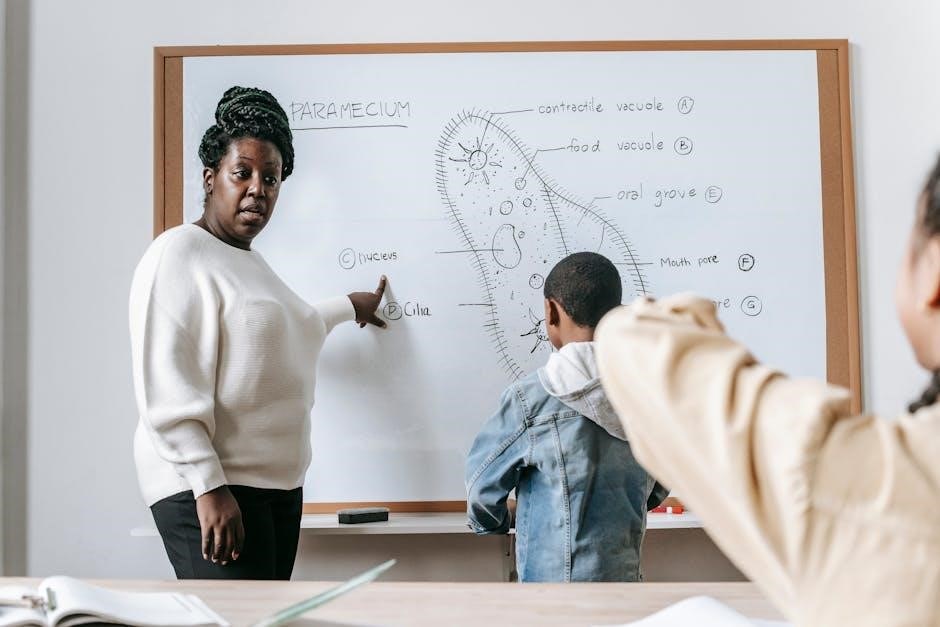
Effective implementation requires careful selection, aligning tools with learning goals. Digital literacy training for both teachers and students is crucial, ensuring responsible and impactful technology use.
Assessment and Evaluation
Central to Marzano’s framework, assessment informs instruction and measures student progress; Formative assessments – quizzes, observations, exit tickets – provide ongoing feedback, guiding adjustments to teaching strategies. These are low-stakes, focused on learning, not grading.
Summative assessments – tests, projects, essays – evaluate overall understanding at the end of a unit. However, their value is maximized when linked to formative data. Analyzing student data reveals patterns of strength and weakness, pinpointing areas needing intervention.
Effective evaluation isn’t solely about scores; it’s about understanding why students succeed or struggle. This informs differentiated instruction and ensures all learners reach their potential, aligning with the core principles.
Formative vs. Summative Assessment
Distinguishing between formative and summative assessment is crucial for effective teaching. Formative assessments, ongoing throughout instruction, provide immediate feedback to both teachers and students. These are diagnostic tools – quick checks for understanding, observations, discussions – designed to improve learning while it’s happening.
Summative assessments, conversely, occur at the end of a learning period (unit, semester, year). They evaluate accumulated knowledge and skills, often through tests or projects. While valuable for grading, their primary purpose should be to demonstrate mastery.
The most impactful approach integrates both. Formative data informs instructional adjustments, while summative results reveal the overall effectiveness of teaching and learning, creating a continuous improvement cycle.
Analyzing Student Data for Instructional Improvement
Effective teaching hinges on data-driven decisions. Analyzing student performance – beyond simply assigning grades – reveals patterns of strength and weakness. This includes examining formative assessment results, identifying common misconceptions, and pinpointing areas where students struggle collectively.
Data analysis isn’t limited to test scores. Observations, classroom discussions, and student work samples offer valuable qualitative insights. Tools like learning analytics platforms can aggregate and visualize this data, making trends more apparent.
The goal isn’t to label students, but to adjust instruction. Data informs differentiated teaching, targeted interventions, and curriculum refinement, ensuring all learners receive the support they need to succeed. This iterative process fosters continuous improvement.
Addressing Common Challenges
Implementing new teaching strategies isn’t without hurdles. A frequent challenge is resistance to change, both from colleagues and students accustomed to traditional methods. Overcoming this requires clear communication, demonstrating the benefits of the approach, and providing adequate professional development.
Time constraints also pose a significant obstacle. Adapting lessons and analyzing data demands extra effort. Schools must prioritize dedicated time for collaboration and planning. Another common issue is limited access to resources, including technology and appropriate materials.
Addressing diverse learning needs within a single classroom requires skillful differentiation. Finally, maintaining student engagement in a rapidly changing world demands innovative and relevant instructional practices; Proactive planning and ongoing reflection are key.
Overcoming Implementation Barriers
Successfully integrating the principles of the new art and science of teaching requires a strategic approach to dismantle common barriers. Begin with phased implementation, starting with pilot programs to refine strategies before widespread adoption. Robust professional development is crucial, focusing on practical application and ongoing support.
Cultivate a collaborative school culture where teachers feel comfortable sharing best practices and seeking assistance. Address concerns about workload by streamlining processes and providing dedicated planning time. Secure administrative buy-in to ensure resource allocation and sustained commitment.
Embrace data-driven decision-making to demonstrate the impact of new strategies and build confidence. Finally, prioritize clear communication with all stakeholders – teachers, students, and parents – to foster understanding and support.
The Importance of Professional Development
Continuous learning is paramount for educators embracing the new art and science of teaching. Effective professional development moves beyond theoretical knowledge, focusing on practical application of Marzano’s five dimensions within diverse classroom contexts. Workshops should prioritize modeling effective strategies, providing opportunities for collaborative practice, and offering constructive feedback.
Mentorship programs pairing experienced teachers with those newer to the framework can foster sustained growth. Ongoing coaching and access to relevant resources, including research articles and online communities, are also vital.
Professional development shouldn’t be a one-time event, but rather a sustained, iterative process aligned with school-wide goals and individual teacher needs, ultimately enhancing student achievement.
Continuous Learning and Growth
Embracing a growth mindset is central to successfully implementing the principles outlined in “The New Art and Science of Teaching.” Educators must view challenges as opportunities for refinement, consistently seeking feedback on their practice and analyzing student data to inform instructional decisions.
This involves actively participating in professional learning communities, engaging with current educational research, and experimenting with new strategies. Reflective practice – regularly examining one’s teaching methods and their impact – is crucial.
Furthermore, staying abreast of technological advancements and integrating them thoughtfully into lessons supports continuous improvement. A commitment to lifelong learning ensures educators remain effective and responsive to the evolving needs of their students.
Resources and Further Reading
To deepen understanding of the concepts presented in “The New Art and Science of Teaching,” several supplementary resources are highly recommended. Robert Marzano’s other works, such as “Classroom Instruction That Works” and “Transforming Teaching with Collaboration,” provide further detail on the research foundations.
Educational leadership organizations like ASCD (Association for Supervision and Curriculum Development) offer articles, webinars, and professional development opportunities aligned with these principles. Online platforms dedicated to teacher resources, such as Edutopia and Cult of Pedagogy, also feature relevant content.

Exploring academic journals focused on educational psychology and instructional design can provide a more in-depth understanding of the cognitive science underpinning effective teaching practices. These resources collectively support ongoing professional growth.
Exploring Additional Materials
Beyond the core text, a wealth of supplementary materials can enrich your understanding of Marzano’s framework. Consider delving into case studies illustrating the practical application of the five dimensions of teaching in diverse classroom settings. These examples demonstrate how to adapt strategies to specific subject areas and student needs.
Workshops and online courses offered by educational consultants specializing in Marzano’s research provide opportunities for interactive learning and personalized feedback. Video recordings of exemplary teachers implementing these techniques can offer valuable insights.
Furthermore, exploring research articles on cognitive science and learning theory will strengthen the theoretical foundation. Utilizing professional learning communities to discuss implementation challenges and share best practices is also highly beneficial.
The Future of Teaching and Learning
Looking ahead, the principles outlined in “The New Art and Science of Teaching” will likely become even more crucial as education evolves. Increased emphasis on personalized learning, driven by data analytics and adaptive technologies, demands a deeper understanding of cognitive processes and effective feedback mechanisms.
The integration of artificial intelligence (AI) promises to automate administrative tasks, freeing educators to focus on building relationships and fostering critical thinking skills. Collaborative learning will be facilitated by virtual platforms, connecting students globally.
However, the human element – the art of teaching – remains paramount. Cultivating a growth mindset, promoting student agency, and adapting strategies based on ongoing assessment will define successful educators in the years to come.